
How To Prevent Frozen Pipes in Northern California
While Northern California is better known for its mild climate than for harsh winters, dropping temperatures can still pose a significant risk to your home’s plumbing. Unexpected cold snaps, especially in higher elevations or inland valleys, can cause water in your pipes to freeze.
When water freezes, it expands, putting pressure on your pipes. This pressure can lead to cracks or bursts. A burst pipe can cause extensive water damage, leading to costly repairs and major inconveniences.
Follow easy, practical steps to protect your plumbing from freezing temperatures and prevent frozen pipes in Northern California. Discover how to identify at-risk pipes, implement preventative measures before cold weather hits, and what to do if you suspect a pipe has already frozen.
Why Frozen Pipes Are a Concern in Northern California
It’s a common misconception that frozen pipes are only a problem in regions with consistently sub-zero winters. However, homes in milder climates, such as Northern California, can be particularly vulnerable. Because severe freezes are infrequent, many contractors avoid installing the same level of insulation and pipe protection as they would in colder areas.
Pipes located in unheated or poorly insulated spaces are most at risk. This includes those in:
- Attics
- Crawl spaces
- Basements
- Garages
- Exterior walls
When the outside temperature drops below freezing (32°F or 0°C), the water inside these exposed pipes can freeze. A small crack in a pipe can release hundreds of gallons of water per day, leading to structural damage, mold growth, and ruined belongings. Proactive prevention can safeguard your home and help you avoid frozen pipes.
How To Prevent Your Pipes From Freezing
Protecting your plumbing is simpler than you might think. By taking a few preventative steps before a cold spell arrives, you can significantly reduce the risk of frozen pipes.
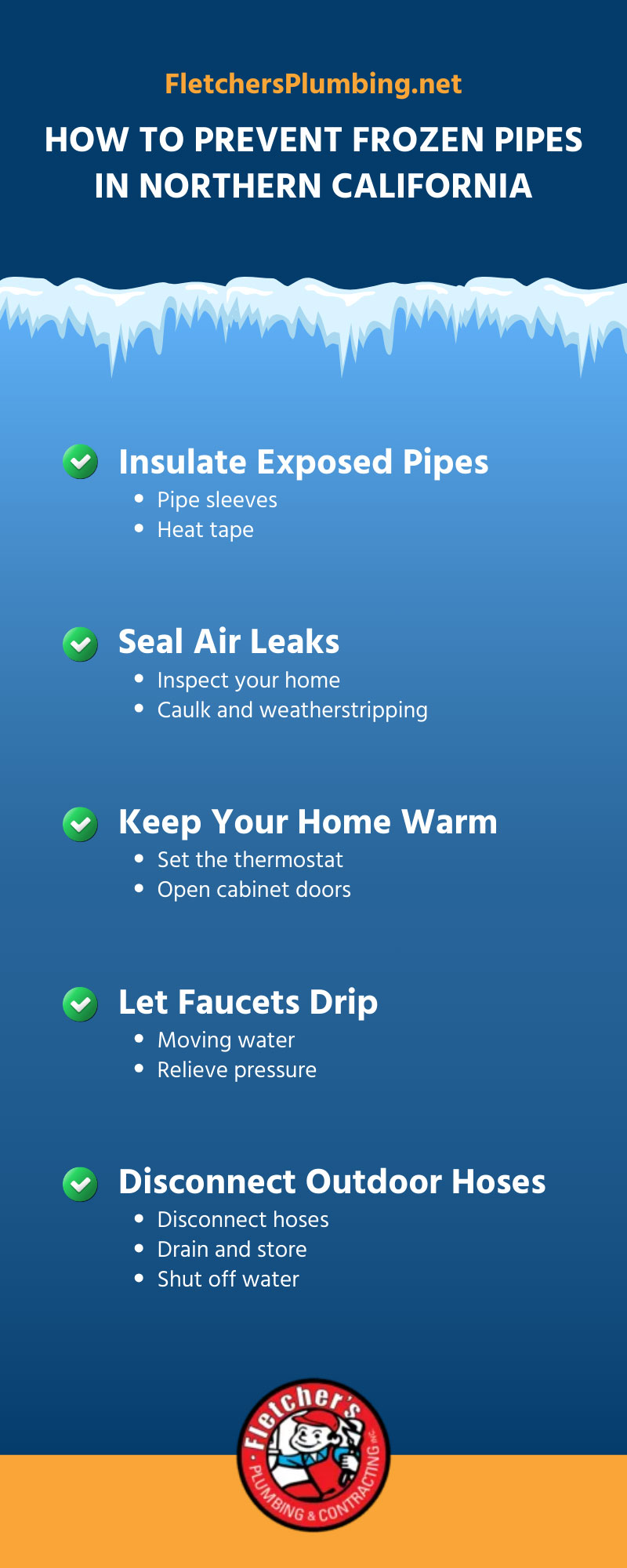
Insulate Exposed Pipes
One of the most effective ways to prevent freezing is to insulate pipes in unheated areas.
- Pipe sleeves: Foam or fiberglass pipe sleeves are inexpensive and easy to install. You can find them at any local hardware store. Simply cut the sleeves to the desired length and wrap them around the pipes.
- Heat tape: For pipes in extremely cold or exposed areas, electrical heat tape or heat cables can provide extra protection. These products wrap around the pipe and generate a small amount of heat to prevent freezing. Always follow the manufacturer’s instructions for safe installation and use.
Seal Air Leaks
Cold air entering your home can cause pipes to freeze, even indoors.
- Inspect your home: Look for cracks and openings around windows, doors, and along the foundation.
- Caulk and weatherstripping: Use caulk to seal small gaps around pipes and electrical wiring. Apply weatherstripping to doors and windows to create a tighter seal and keep cold drafts out.
Keep Your Home Warm
Maintaining a consistent temperature inside your home is crucial during cold weather.
- Set the thermostat: Keep your thermostat set to a consistent temperature, both day and night. While lowering the temperature overnight can save you money, a sudden drop in temperature could put your pipes at risk.
- Open cabinet doors: For pipes located in cabinets under sinks (especially on exterior walls), open the cabinet doors. This allows warmer air from the room to circulate through the plumbing, helping to keep it from freezing.
Let Faucets Drip
During a severe cold snap, allowing a steady drip of cold water from faucets connected to pipes that have frozen before can prevent freezing now.
- Moving water: Even a trickle of moving water is much less likely to freeze than stationary water.
- Relieve pressure: Letting a faucet drip also relieves pressure in the system. If a freeze does occur, this open faucet can help prevent a pipe from bursting.
Disconnect Outdoor Hoses
Before the first freeze, it’s essential to prepare your outdoor plumbing for winter.
- Disconnect hoses: Detach all garden hoses from outdoor spigots.
- Drain and store: Drain any remaining water from the hoses and store them in a garage or shed.
- Shut off water: If your home has a separate shut-off valve for outdoor spigots, close it for the winter. Then, open the outdoor faucet to drain any remaining water from the pipe. This removes the water that could freeze, expand, and break the spigot or connecting pipe.
What To Do If Your Pipes Freeze
If you turn on a faucet and only a trickle of water comes out, you may have a frozen pipe. It’s important to act quickly but carefully.
Step 1: Locate the Frozen Pipe
First, identify which pipe is frozen. Check all the faucets in your home to see if they are still functioning. The frozen section is likely located in an unheated area, such as a crawl space or an exterior wall. You might see frost on the outside of the pipe.
Step 2: Thaw the Pipe Safely
Once you’ve found the frozen pipe, you can begin the thawing process. Never use an open flame, such as a propane torch or blowtorch, to thaw a pipe. This is a serious fire hazard and can damage the pipe.
Instead, use one of these safer methods:
- Hair dryer: Apply gentle, even heat by moving a hair dryer back and forth along the frozen section of the pipe.
- Heating pad: Wrap an electric heating pad around the pipe.
- Hot towels: Soak towels in hot water, wring them out, and wrap them around the frozen area.
While thawing, keep the affected faucet open. As the ice melts, water will start to flow again, helping melt the remaining ice in the pipe.
Step 3: Check for Leaks
After you have thawed the pipe and water is flowing normally, carefully inspect it for cracks or leaks. The pressure from the ice may have damaged the pipe, even if it didn’t burst. If you find a leak, shut off the main water supply immediately and call a professional plumber.
When To Call a Professional Plumber
While you can resolve some frozen pipe issues on your own, there are times when it’s best to call a professional. If you can’t locate the frozen pipe on your own, a plumber can use their advanced tools to find the hidden blockage.
Plumbers are also helpful if the frozen pipe is in a tight, inaccessible space that you can’t reach, or if the pipe bursts into your home. If you experience any of these issues, contact Fletcher’s Plumbing & Contracting.
Operating since 1973, our California plumbing contractors can help you with a variety of plumbing problems affecting your home. Don’t wait for plumbing problems to get serious; call us to repair them quickly and effectively.
Safeguard Your Home This Winter
Taking preventive measures to avoid frozen pipes is the most reliable way to protect your home from the damage and disruption they cause. Using these tips, you can ensure your plumbing system remains safe throughout the winter. If you encounter a frozen pipe, thaw it slowly and safely, or contact Fletcher’s Plumbing & Contracting to handle it.